
$230 phone appointment.
Get some direction and peace of mind today
Available until 9pm
A section 106 discharge means the court finds the charge proved and still enters no conviction. One call with Melanie Coxon, barrister, 30+ years' experience, tells you whether yours has potential legs. The full fixed fee is published below.
Or text us on 021 911 133 and we'll ring you backGoogle reviews
Each one's on its own merits. Ring, and we'll tell you where yours stands.
A section 106 application is built out of documents: a sworn affidavit and written submissions, with your evidence attached, filed before the hearing so the judge has read them before anyone speaks.
You do the courses, the reparation and the voluntary work. Melanie works out which documents prove the rest, drafts the affidavit and the submissions, and argues it on the day.
It has to be raised before you're sentenced, and the evidence takes months to gather: allow six to nine months from being charged, so if you already have a court date, ring today. You won't be left alone with any of it.
We're straight shooters. If a discharge isn't realistic in your case, you'll hear that on the first call, not after the first invoice.
The $230 phone appointment is from anywhere in New Zealand. The court work is at the Auckland courts.
Most barristers doing this kind of work charge by the hour, and few publish it. We charge fixed amounts for fixed pieces of work, set out on the right.
The main cost is the submissions and supporting affidavit, payable as five bites of $575 if that better suits your pocketbook. The wrap-up fee is the part you only pay if you get the result; if the discharge isn't granted, it's never charged.
If money is what's stopping you ringing, ring anyway and say so. Instalments are how this fee is normally paid, not a favour.
Or text us on 021 911 133 and we'll ring you backPay as you go, by instalment. Debit card, credit card or online transfer. Full price list on our fees page.
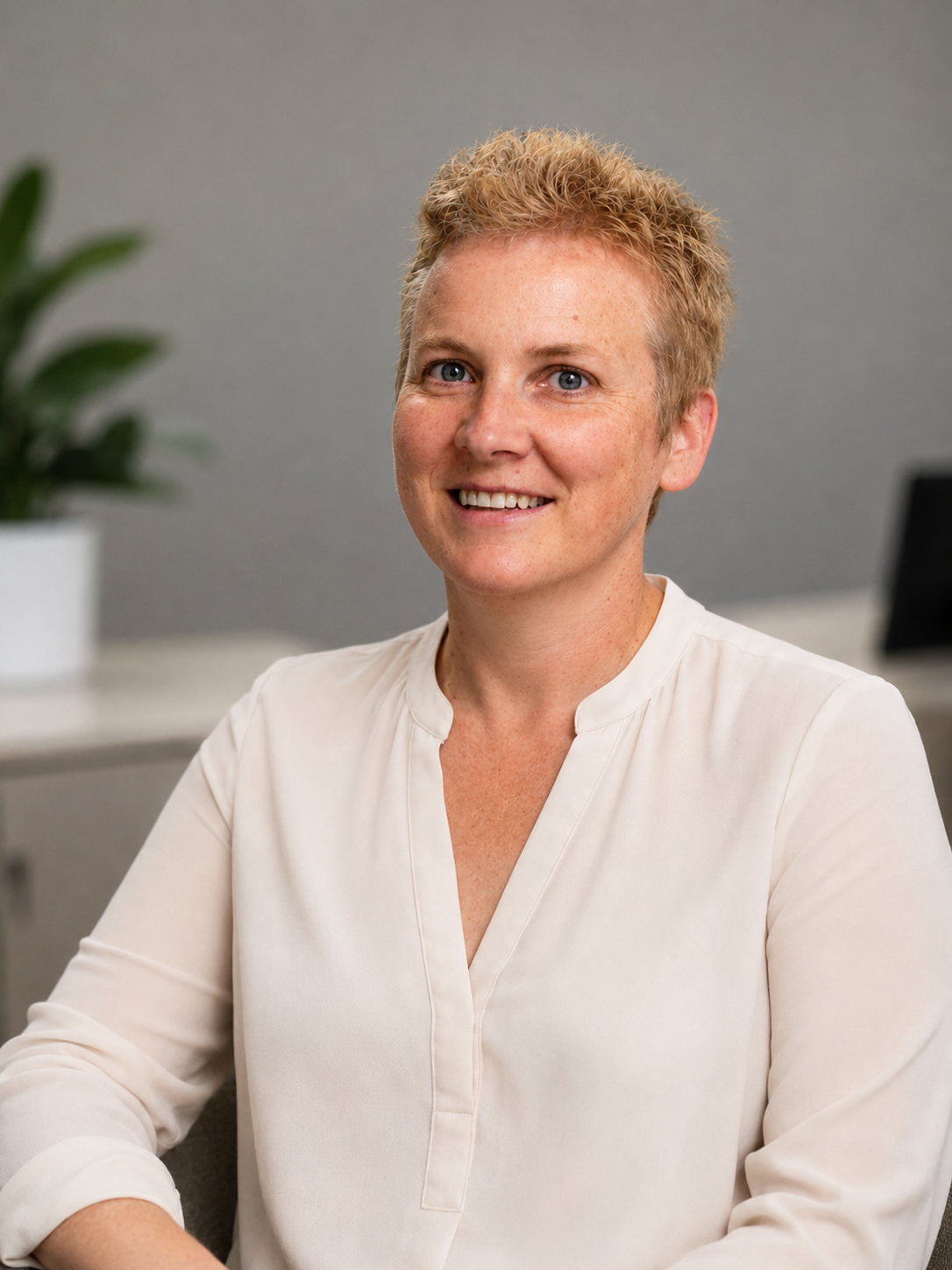
Melanie Coxon is a barrister sole, in the District Court and in her own right in the High Court. The person you speak to on the first call is the person who writes your submissions and stands up in court. No juniors, no hand-offs.
The charges are usually drink driving, a traffic charge or a first criminal charge; the problem is always a conviction ending something you've spent years building.
Whether it's your first time or you're on a first-name basis with the court staff, we're not here to judge. We're here to sort it and keep you moving forward.
This isn't an eligibility test like a limited licence; it's a judgement about proportion. Each one's on its own merits, and if yours isn't realistic you'll hear it on the first call, not after you've paid for an application.
You need both sides: low-to-moderate offending and a real, specific, provable consequence.
Better to know now than after you've paid us.
You can move both sides of the scale. Almost nobody realises that in time to do it.
Yes, and this surprises nearly everyone. The charge has to be proved, by your plea or at a hearing; the discharge is what can happen after that, when the judge decides whether to convict. What you shouldn't do is plead guilty at a first appearance before anyone's read the police disclosure.
Three questions, in order. How serious was the offending? Your version of it, and what you've done since counts. What would a conviction cost you? You specifically, and it's a matter of proof, not argument: this is where applications are won or lost. Is that cost out of all proportion to the offending? Not "harsh". Not "unfair". Out of all proportion. Only then does the court have a discretion, and the police often oppose it.
Sections 106 and 107 of the Sentencing Act 2002 and the approach set by the Court of Appeal. General information, not advice on your case.
Almost. In law it's deemed an acquittal: no conviction, nothing to declare when a form asks about convictions, nothing on a standard record check. Three things still surprise people: the court can order disqualification, reparation, costs or a donation as a condition; some visa forms ask whether you've ever been charged; and a full police vet can still show the charge. A reason to know what you're buying, not a reason not to apply.
You're convicted and sentenced, and the work you did still counts towards the sentence. That's the honest answer, and it's why the effort is worth making either way. A refusal can be appealed to the High Court: separate work, at a separate fee.
Usually yes. A discharge and a disqualification can sit together, and a disqualification is exactly what a work or limited licence is for. One exception: taxi and passenger-service drivers can't hold a limited licence at all.
One phone appointment, $230, usually the same day, for however long it takes. You'll come off the call knowing whether a discharge is realistic, what the court would need to be shown, and what it's likely to cost. Get some direction and peace of mind today.
Or text us on 021 911 133 and we'll ring you backMon–Fri 9am–9pm · Sat 2pm–6pm
No credit, free call 0800 OK2DRIVE (0800 6523 7483)